
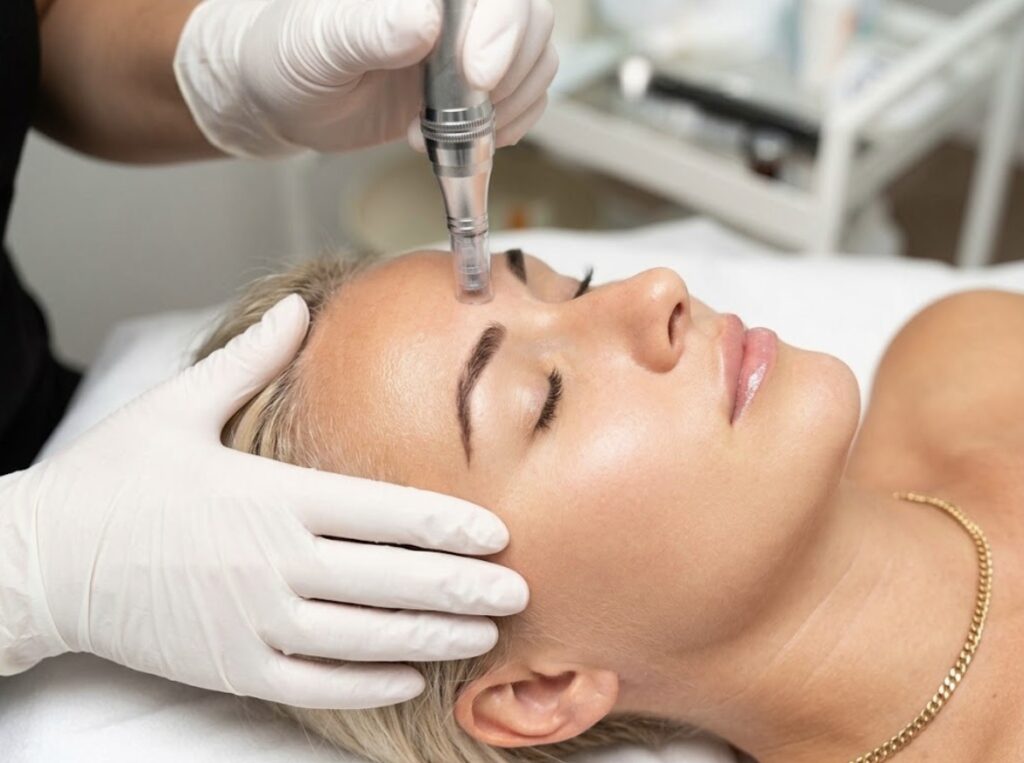
Most people don’t walk in asking for RF microneedling in Pompano Beach by name. They walk in with a photo on their phone, a patch of melasma that’s outlasted three other treatments, or a jawline that’s started to soften.
Then the research starts. Morpheus8. Scarlet. Vivace. SYLFIRM X. Every clinic calls its device the best one, and online they all get described the same way.
They aren’t the same. How a device delivers radiofrequency determines what it can safely treat, and that difference shows up most in patients with pigment concerns or deeper skin tones. Here’s an honest comparison, and why we run the device we do at Icon Aesthetics & Wellness.
What You’ll Learn
- How radiofrequency changes what microneedling can treat
- Where Morpheus8, Scarlet, and Vivace actually differ
- What dual mode means on SYLFIRM X, and why it matters for pigment
- Who’s a candidate, and who we ask to wait
- What recovery and results look like, week by week
How RF Microneedling Works and Why It Goes Further Than Needling Alone
Traditional microneedling creates thousands of tiny channels in the skin, and your body responds by building new collagen. It works. The AAD overview covers that process well.
RF microneedling adds heat. The needles deliver radiofrequency energy underneath the surface, so the collagen response happens deeper and stronger than needling can manage on its own. In real life, that means firmer skin along the jaw and neck, softer acne scarring, smaller-looking pores, and better texture overall.
Who does best with it? Patients with mild to moderate laxity and textural concerns, usually from their early thirties onward. It won’t replace a facelift, and it won’t completely remove a scar. Results build over three to six months and generally hold for a year or more with maintenance, though every patient responds differently.
RF Microneedling Devices Compared: Morpheus8, Scarlet, and Vivace
Different builds, different jobs:
| Device | How it delivers RF | Needles | Best known for |
|---|---|---|---|
| Morpheus8 | Fractional RF | Coated, deeper penetration | Subdermal remodeling and body work |
| Scarlet | Short pulse RF | Non insulated | Facial tightening with less discomfort |
| Vivace | Fractional RF delivered through the needles | 36 gold-tipped insulated needles inserted by a robotic motor | Fine lines, wrinkles, texture, and acne scarring, with built-in red and blue LED light |
| SYLFIRM X | Pulsed wave and continuous wave | Non-insulated, 300 micron | Tightening plus pigment and vascular concerns |
Morpheus8 is built by InMode and reaches deeper, which is why it comes up so often for body contouring and jowls. Scarlet shares its design lineage with SYLFIRM and uses a short pulse approach that patients tend to find comfortable. Vivace uses 36 gold-tipped insulated needles inserted by a robotic motor to deliver fractional RF, with built-in red and blue LED light as part of the treatment platform.
None of these is a bad device. They’re just built around different priorities, and the one that suits you depends on what you’re actually trying to fix.
What Makes SYLFIRM X Different From Other RF Microneedling Devices
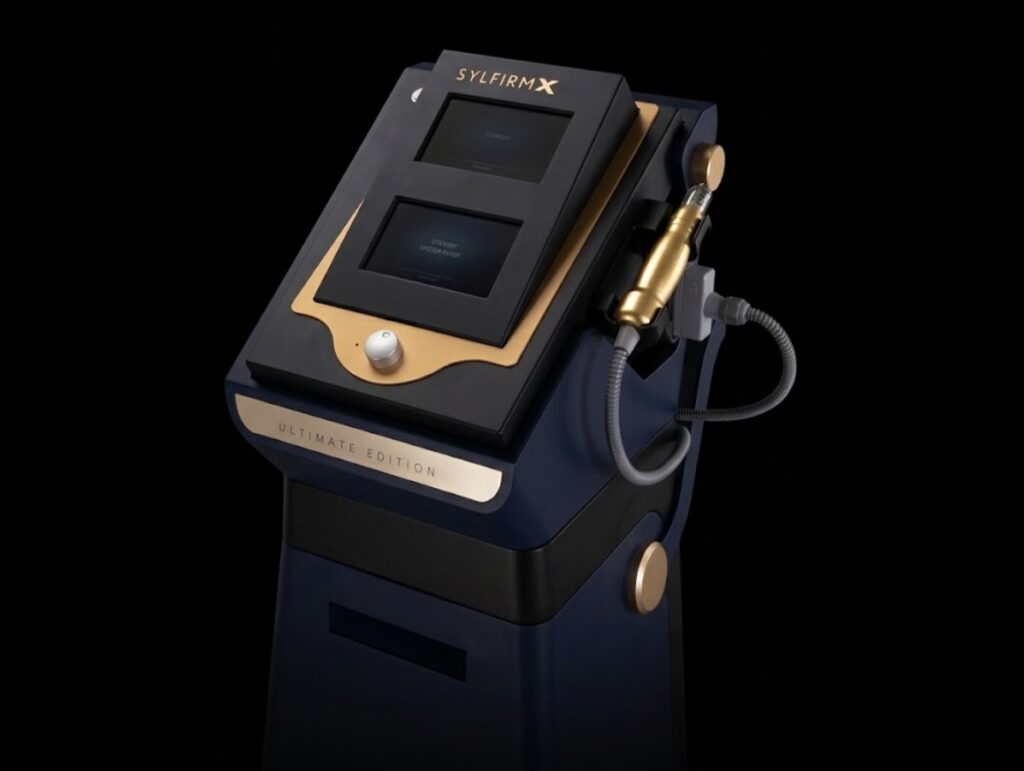
SYLFIRM X comes from Viol in South Korea, and it’s the first RF microneedling system FDA-cleared to deliver pulsed-wave and continuous-wave energy in one device. It’s also the only one cleared to treat neovascular conditions like melasma and rosacea.
That dual mode is the whole point. Continuous wave heats the deeper layers steadily, which we use for laxity, fine lines, acne scars, and enlarged pores. Pulsed wave sends short, targeted bursts instead of broad heat, making it ideal for pigment and active acne.
The needles matter too. They’re 300-micron, bipolar, and non-insulated, so energy travels the full length of the needle rather than only the tip. Chad Van Horn, PA-C, board-certified in aesthetic and anti-aging medicine, sets depth anywhere from 0.3mm to 4mm depending on the area and the concern. Choosing the mode, or the combination, is a clinical decision made at your consultation.
RF Microneedling for Melasma, Rosacea, and Deeper Skin Tones
If you have a deeper skin tone, you’ve probably been warned off laser for melasma. Maybe you tried it anyway and watched the pigment return darker. That’s post-inflammatory hyperpigmentation, and it happens because laser light targets melanin.
Radiofrequency doesn’t target melanin. Paired with shallow depth and short pulses, that’s what lets us treat pigment in skin tones many lasers can’t handle safely. One clinical study of a pulsed, bipolar microneedling RF device in Fitzpatrick III to V patients found it safe and useful as an adjunct for melasma.
Here’s the honest part. We manage melasma; we don’t cure it. Most patients notice real change after their second or third session, and holding that result takes maintenance visits and daily sun protection. Anyone promising permanent clearance isn’t being straight with you.
Who Is a Good Candidate for RF Microneedling?
Most healthy adults are, across a wide range of skin tones, particularly if you’re dealing with loose skin, acne scars, enlarged pores, or pigment that hasn’t responded to anything else.
We’ll hold off if any of these apply:
- Active skin infection or severe acne
- Pregnancy or breastfeeding
- Severe skin disease such as eczema, psoriasis, or herpes simplex
- Metal implants in the treatment area
- A tendency toward keloid scarring
- A weakened immune system
Cosmetic treatment is elective, and candidacy is a conversation, not a checklist. We’ll go through everything in person before scheduling anything.
RF Microneedling Downtime and Results Timeline
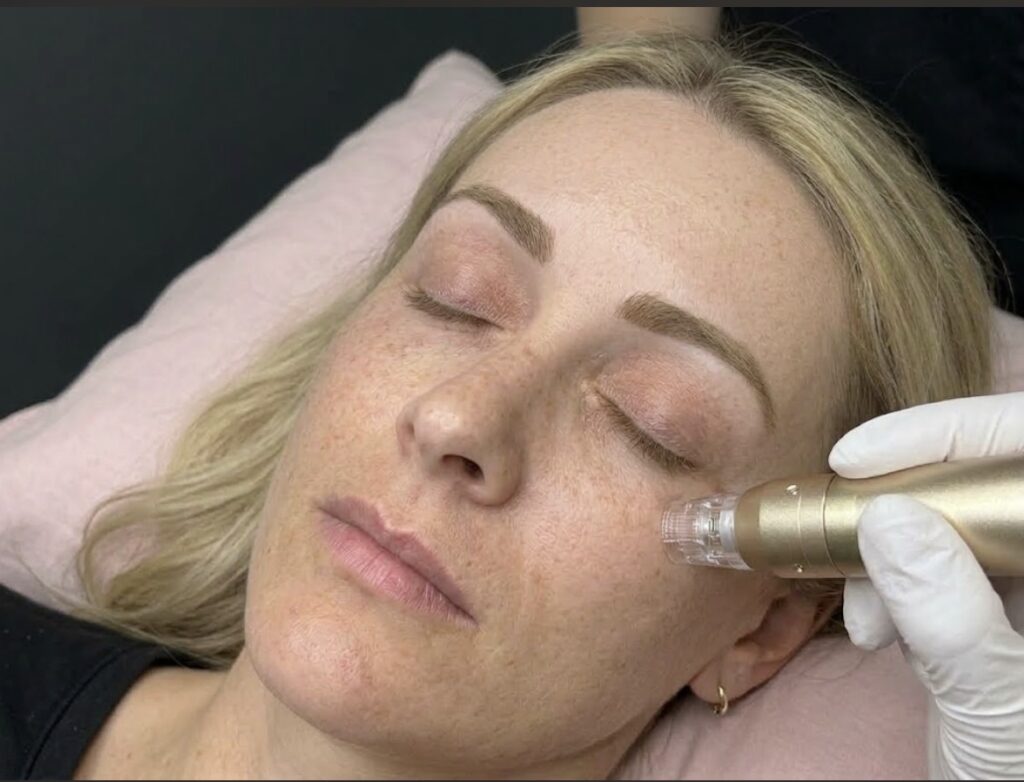
We apply topical numbing 20 to 30 minutes beforehand. Most patients describe warmth, pressure, and light tapping rather than pain. Appointments run 30 to 60 minutes depending on the area and the modes we use. Afterward, your skin feels warm and flushed, like a mild sunburn.
The first week usually looks like this:
- Day of treatment: redness, warmth, some swelling
- Days 1 to 2: redness fading, mild swelling possible around the eyes, makeup usually fine after 24 hours
- Days 3 to 5: skin may feel dry or slightly rough, with light flaking
- End of week 1: skin looks normal while collagen work continues underneath
We recommend three to four sessions spaced four to six weeks apart. SPF 30 or higher every day protects what you’ve paid for, and in South Florida that isn’t seasonal advice.
Combining RF Microneedling With CoolPeel and Korean Skin Boosters
Pairing treatments is how we practice. After a session, we can layer on Korean skin boosters like Toscani Polynucleotides and PDRN while the microchannels are still open and the skin is most receptive.
For patients who want more done in one visit, we can combine RF microneedling with CoolPeel, our CO2 resurfacing treatment. CoolPeel handles the surface. RF microneedling handles what sits underneath. If your concerns are mostly superficial, standard microneedling with boosters may be the better starting point, and we’ll say so.
Frequently Asked Questions for RF Microneedling in Pompano Beach
1. Does RF microneedling hurt?
We use a topical numbing cream for 20 to 30 minutes before treatment, so most patients report pressure and warmth rather than pain. Some areas, like the forehead and along the jawline, feel more sensitive than others. Redness and mild swelling for a day or two afterward are normal and settle on their own.
2. How much downtime does RF microneedling need?
Plan on one to two days of redness that looks like mild sunburn, with possible light flaking around day three to five. Most patients return to work the next day and can wear makeup after 24 hours. Skip heavy workouts, saunas, and direct sun for the first 48 hours.
3. How many RF microneedling sessions will I need for melasma?
We typically recommend three to four sessions spaced four to six weeks apart. Visible change usually shows up after the second or third. Melasma is a condition we manage rather than cure, so maintenance sessions and daily SPF help maintain results. Your plan depends on how your skin responds.
4. Is RF microneedling safe for darker skin tones?
Radiofrequency doesn’t target melanin the way laser light does, which is why RF microneedling is generally safer across deeper skin tones. Settings still matter enormously. Providers adjust depth, mode, and energy to your skin, which is why provider experience matters more than the brand name on the machine.
5. How much does RF microneedling cost in Pompano Beach?
Pricing depends on the area treated, how many sessions your plan calls for, and whether you’re adding skin boosters or CoolPeel in the same visit. The FDA guidance on microneedling devices is worth reading before you shop on price alone. We’ll quote your full plan at consultation.
Your Next Step With RF Microneedling in Pompano Beach
The device matters, but the hands running it matter more. If you’re weighing options, visit our SYLFIRM X page to see how we approach dual-mode treatment, or explore our microneedling options if you’re earlier in the process. Want a straight answer about your skin instead of a brand comparison? Book a consultation, and Chad will build the plan around what you actually need.

Chad Van Horn, PA-C, is a board-certified physician assistant and one of America’s Top 100 Aesthetic Providers. Known online as “Needle Daddy,” he specializes in aesthetic and anti-aging medicine with a focus on natural, beautiful results and patient comfort. A graduate of Barry University’s Clinical Medical Science program, Chad combines medical precision with artistic vision drawn from his background in music and photography. Outside of work, he enjoys spending time with his family and two dogs.